
Location Introduction – Birmingham is one of the UK’s largest and most diverse cities, with excellent transport links to the West Midlands area, a wide range of road types, and easy access to both busy urban routes and major motorway networks. Its central location and varied driving environment make it an ideal place to deliver our driving courses, giving participants practical experience across realistic and demanding road conditions while remaining easily accessible from across the Midlands and beyond.
All our courses are bespoke to your needs and requirements, whether a full or half day, multiple half days or if we are training one driver or many. Here are the things we cover:
* Developing a positive mindset for continual improvement when driving
* Looking at specific vehicle controls – including new technology and how it is designed to help you
* Observing the road ahead
* Having an improved appreciation for speed
* Understanding how to become a driver who is safe on all road types
* Reversing and manoeuvres – ideal for vans but also useful for cars
* Being aware of the extra safety precautions when driving in urban traffic
* Eco-safe driving to save fuel (effective use of speed, gears, and planning)
* Understanding the rules of the road
* How to deal with the problem of road rage – and how to manage other drivers’ emotions
* How to identify and deal with skids – and, more importantly, how to stop them before they start
After the course, you will get a driving report, which has the following:
* Your name, your tutor’s name, along with their DVSA registration number
* Notes on the initial drive
* Scoring before and after the session in 20+ areas of driving
* Final notes and tips
* Overall risk score from low to high
This report, with a unique verification number, is emailed to you as a PDF a few days after your course.
There are many benefits of taking driver training with Drivers Domain UK:
* We come to you for the training – not the other way round
* All training is on-road based
* Handpicked tutors
* Detailed reporting for each driver – with notes from the tutor who provided the training and course verification on each report
* Bespoke training based on a driver’s specific needs
* Full UK coverage
* Personal account manager
* 7hr and 3.5hr options
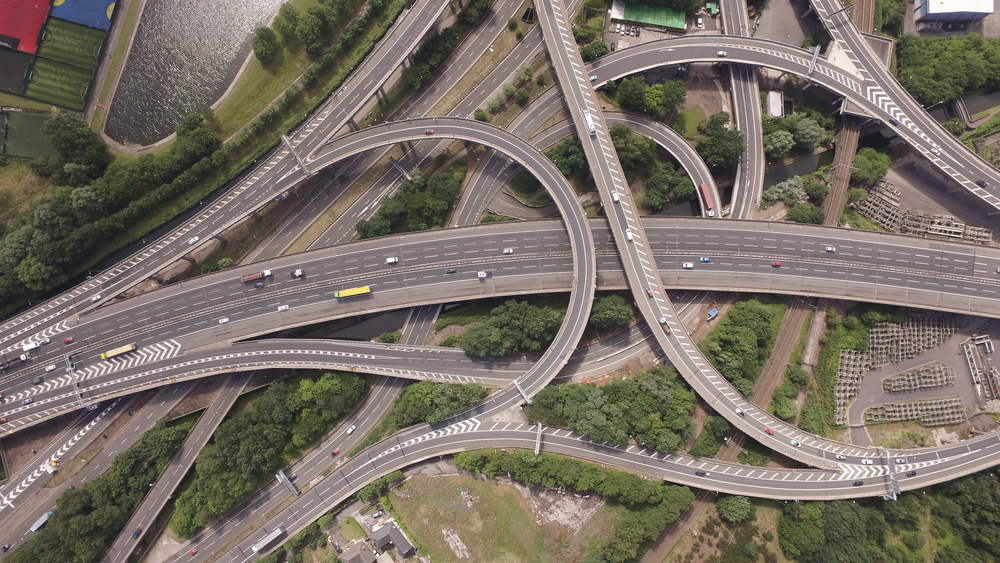
The City of Birmingham forms a large metropolitan area with the residential borough of Solihull to the southeast and Wolverhampton and the industrial towns of the Black Country to the northwest. The M5 and M6 motorways cover Birmingham, and with a great network of A roads, it is the perfect area to take further training with an advanced driver course. Motorway course clients are well served in Birmingham, with quick access to the M56, M6, M54, and the M42. Our tutors have excellent local knowledge, are highly qualified, and will come to you in your own car or van for the training. Although Birmingham is an urban area, there is quick access to a range of rural roads – perfect for more vehicle handling techniques to be perfected.

Whether you are a private client or a business customer, we can build a course based on your specific needs and requirements anywhere in the UK.
* 3.5hr –The benefit of this course, the shortest in the range, is that it’s the lowest-priced option. The disadvantage is that, for some drivers, it’s too short. Ideal mainly for companies training two or more drivers. Some drivers find they need more than a 3.5hr session but only realise this after the session. The 3.5hr is ideal for a toe-in-the-water taster, with the view of booking more sessions priced on a pro-rata cost later on.
* 2 x 3.5hr – This is beneficial for customers who can’t drive for a full day and need the split to help them absorb more over a more extended period. Often, a driver gets homework in this session so they can practice what was covered in session one and prepare for session two. Older drivers often opt for this course. Many things are covered in these two sessions. It’s in the second session you really see changes happen.
* 7hr full day – Although it can be tiresome for some, a full day is cheaper than 2 x 3.5hr. It’s suitable for those who are short on time and want the training sorted in one day. Maybe your company has asked you to do this course, or perhaps you feel a 7hr will work better for you and your circumstances. Talk with us if you are not sure. With business clients, we can split a full day so one driver is trained AM and then one is trained PM. One driver will be trained from 09:00 to 12:30, then the second driver from 13:00 to 16:30 (we can be flexible on start times). Each driver has 3.5hr driver training.
* We also offer longer courses for those with specific issues and have 3, 4 and 5 x 3.5hr options. These are often taken over several weeks and are great if you have more deep-rooted issues or have not driven for a long while. Those who commit to these longer-duration courses see change happen over the weeks as they build confidence and address the specific issues they may be facing. If you book 5 x 3.5hr session but only feel you need 4 x 3.5hr, we can pro-rata refund the final one as long as it’s within our notice period. We need 10 days to cancel a course.
Contact us:
If you have any specific questions you need help with or would like to enquire further, such as looking at date options or more information on training in a particular area of the UK, please get in touch. Our team is here to help you, whether by email or phone. If you prefer to email, we aim to get back to all enquiries within 2 hours during working hours.
Road Safety Risks and Information – Birmingham
Birmingham is one of the most highly populated cities in the UK, and the traffic volume and accident statistics relate to this, with numerous fatal collisions across the area, far more than most other large cities. Three motorways serve Birmingham: the M5, which connects to the South West of the UK; the M42, which connects to Tamworth and onto the East Midlands; and the M6 and M6 Toll, which allow traffic to bypass Birmingham and Wolverhampton. All of these routes are strewn with collision sites and should be driven with care at all times. Most accidents occur near junctions, especially at large urban roundabouts and intersections. They can be due to poor lane positioning when exiting roundabouts, incorrect speeds, or being too slow or too fast when entering and exiting motorways. You must understand motorway driving regulations and look out for other drivers who may be less confident with their directions, as this can be the difference between a safe journey and a chaotic accident.
The A38 is a hectic route into the centre of Birmingham with many severe and often fatal collision sites along the entire route, and most of these accidents occur near the traffic light and roundabout junctions, with the Oak Tree Lane junction being especially hazardous as it links to a cut-through for the A38 along the B384, Bristol Road. The A41 crosses Birmingham from the M5 to the west to the M42 to the east, and this route links many other fast A roads, such as the A4540 ring road, the A456, the A34 and the A38. These routes are prone to congestion, especially during rush hours, and are littered with crash sites, with most happening near traffic lights and roundabout junctions where drivers lack observation and indication, causing many issues.
The added frustration of driving in urban environments at these times will always increase accident statistics, and even though busy town driving is often slower, the accidents caused can still be very upsetting and costly, and will add to further congestion. This is why it is essential to pay close attention when driving in heavy traffic and always keep an eye out for other drivers who may not be driving as well as you. Urban driving will always have public transport routes competing for road space, and many accidents happen where drivers are impatient and are tempted to overtake without noticing passengers crossing in front. This has sadly resulted in many fatalities in the past few years.
Road Safety Statistics and Challenges
Despite various efforts, Birmingham still faces road safety challenges. In some areas, there are higher-than-average numbers of accidents, often involving vulnerable road users like pedestrians and cyclists.
Accidents: Birmingham has seen accidents related to both motor vehicles and non-motorised road users. The mix of heavy traffic and a high number of pedestrians and cyclists means that accidents still occur regularly, though measures continue to be taken to reduce them.
Challenges in Congested Areas: High traffic congestion, especially in the city centre, can contribute to both road safety risks and delays in emergency response times.
Local Authorities and Police: The City Council works closely with West Midlands Police and community organisations to improve road safety. These collaborations focus on tackling issues like dangerous driving, road rage, and alcohol-related incidents.
This is a small selection of crash sites across Birmingham, but if you have any specific roads you travel on and are keen to discover which parts are at higher risk of collisions, don’t hesitate to contact us. We offer this service free of charge to anyone interested.