
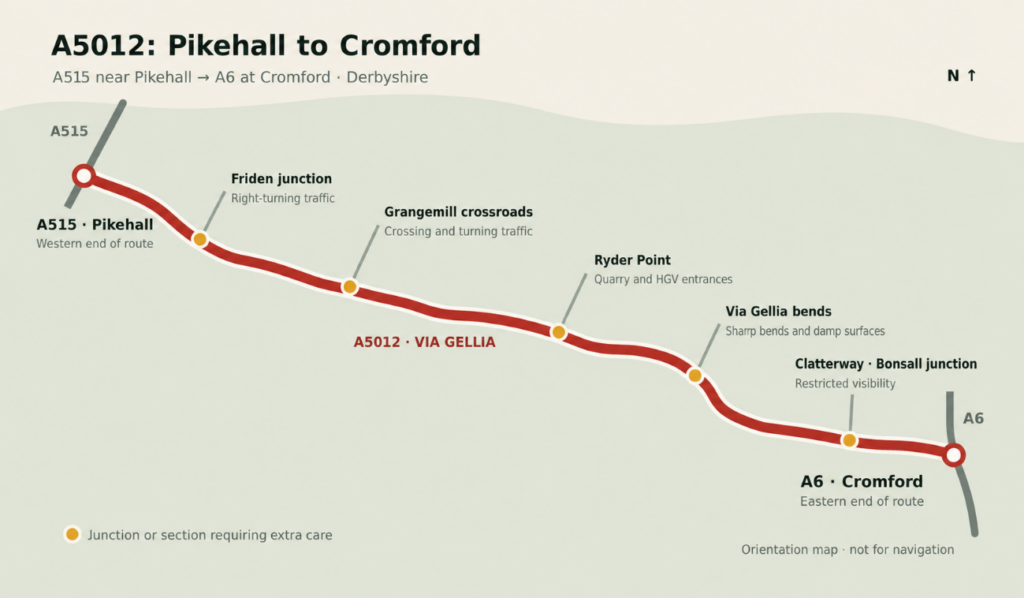
The A5012 between the A515 near Pikehall and the A6 at Cromford is one of Derbyshire’s most scenic roads. It runs across exposed upland countryside before descending through the steep, wooded limestone valley known as the Via Gellia.
That dramatic landscape is also what makes the route challenging. Drivers face fast-changing conditions, hidden junctions, sharp bends, quarry traffic, damp road surfaces and stretches where there is little room for error.
The entire corridor deserves care, but several locations present particular collision risks.
Pikehall and the A515 junction
At its western end, the A5012 meets the A515 near Pikehall. This junction can be demanding because traffic on the A515 may be travelling at rural-road speeds, while vehicles joining or leaving the A5012 must slow, turn or cross the path of other road users.
Drivers approaching the junction should be alert for:
- Vehicles braking to make a turn
- Drivers waiting for a suitable gap
- Large vehicles needing more space to manoeuvre
- Traffic approaching faster than expected
- Motorcycles that may be harder to see at first glance
- Pedestrians and local activity around Pikehall
A clear-looking road can create a false sense of security. Distance and speed are not always easy to judge on open rural routes, particularly at night or in poor weather. Drivers should take a second look before pulling out and should avoid pressuring the vehicle ahead to enter the junction.
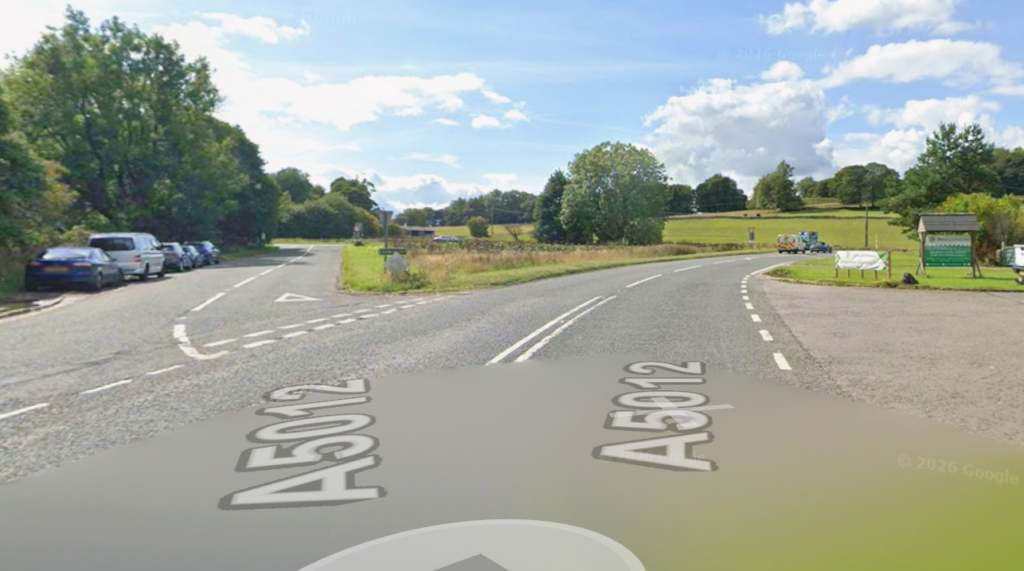
The open section between Pikehall and Friden
The road east of Pikehall crosses exposed countryside. Compared with the confined Via Gellia, this section can appear wide and straightforward. That may encourage some drivers to build up speed or attempt an overtake without fully considering the next bend, dip or junction.
Strong winds, fog, heavy rain and winter ice can affect this higher ground. Agricultural vehicles may also travel slowly or turn into fields with limited warning.
Particular care is needed near:
- Field entrances
- Isolated properties
- Minor side roads
- Crests and dips that hide approaching traffic
- Places where mud or loose material may be carried onto the road
Overtaking requires patience. A dip in the road can briefly conceal an oncoming car or motorcycle, while a vehicle ahead may be preparing to turn into an entrance that is difficult to see.
The Friden junction
The junction near Friden is an important turning point along the route and has been identified for road-safety improvements, including changes intended to protect right-turning traffic.
The principal danger arises when a vehicle slows or stops to turn across the path of approaching traffic. Following drivers may not immediately realise that the vehicle ahead is waiting to turn, especially if they are travelling too quickly or too close.
Drivers should watch for indicators and brake lights well in advance. Those turning right should signal early and position themselves carefully, while approaching traffic should avoid overtaking anywhere near the junction.
Large vehicles may need extra time to slow down or complete a turn. Allowing a generous following distance provides a clearer view and makes sudden braking less likely.
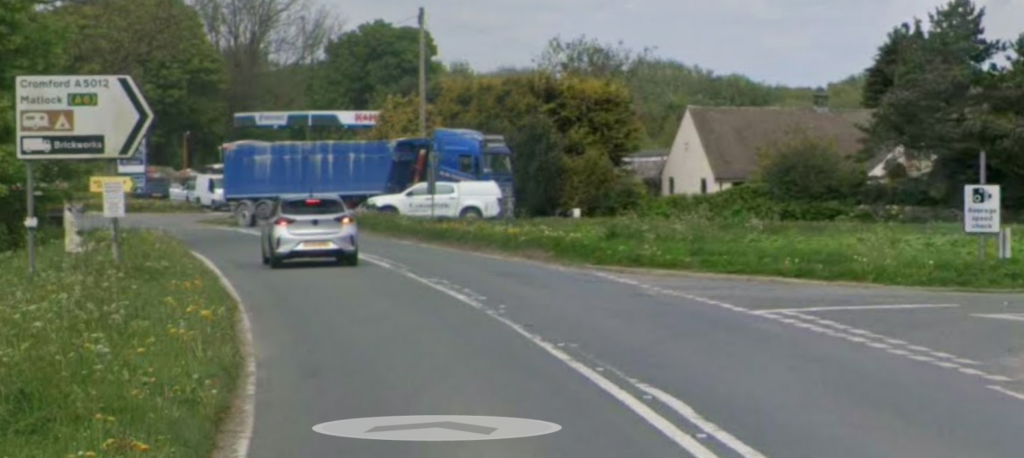
Grangemill Crossroads
Grangemill crossroads is one of the most important areas of concern on the A5012. Several traffic movements come together here, including vehicles travelling along the main route and others joining, crossing or turning towards nearby communities.
The crossroads can become complicated when more than one driver wishes to turn at the same time. A vehicle may also block another road user’s view, making it difficult to see an approaching motorcycle, bicycle or car.
Potential hazards include:
- Vehicles crossing the A5012
- Right-turning traffic waiting in the carriageway
- Drivers slowing suddenly after travelling through open countryside
- Large vehicles requiring a wider turning path
- Confusion over another driver’s intended movement
- Restricted views caused by traffic or roadside features
- Cyclists and motorcyclists being obscured by larger vehicles
Approach the crossroads at a speed that allows you to stop comfortably. Do not rely on another driver flashing their headlights, as this may only mean they are giving way and does not guarantee that every direction is clear.
Drivers should also avoid following a large vehicle blindly through the junction. Wait until there is a clear view and make an independent safety check.
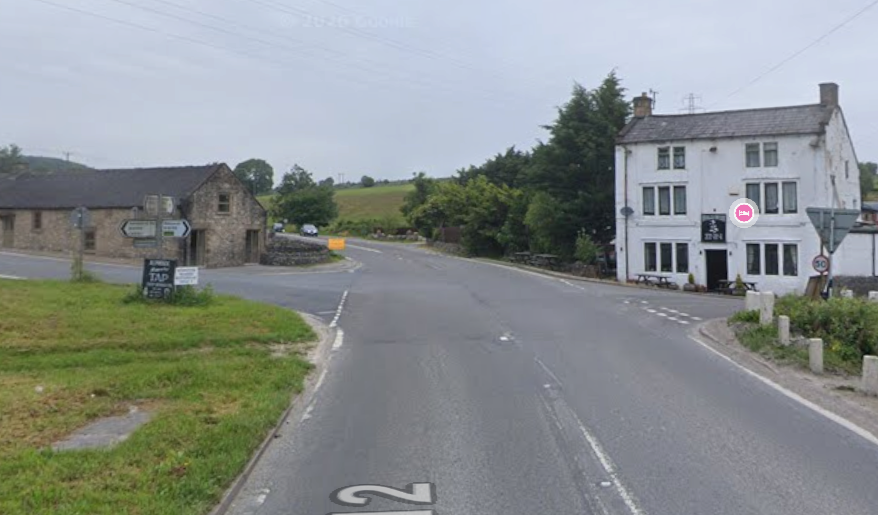
The change from open road to the Via Gellia
Near Grangemill, the character of the A5012 changes significantly. The open upland road gives way to a narrower, more enclosed valley route.
This transition matters because drivers may carry too much speed from the straighter section into the first sequence of bends. The road can tighten unexpectedly, and the tree-covered surroundings can make conditions darker and damper than they were only a short distance earlier.
Drivers should reduce speed before entering the valley rather than waiting for the first sharp bend. It is also important to increase the distance from the vehicle ahead, particularly when following a motorcycle or heavy goods vehicle.
Ryder Point and nearby industrial entrances
Ryder Point and the surrounding quarry and industrial entrances require close attention. Heavy goods vehicles may enter or leave the road, travel slowly on gradients or occupy more of the carriageway when turning.
A lorry pulling out may take longer to gather speed than a car. Drivers approaching from behind should resist the temptation to overtake immediately, as another entrance, bend or oncoming vehicle may be hidden from view.
Loose stone, dust, mud or water may sometimes be found near industrial access points. These materials can reduce grip, particularly for motorcycles and bicycles.
Safe driving around Ryder Point means:
- Expecting slow-moving vehicles
- Leaving a larger stopping distance
- Staying out of lorry blind spots
- Avoiding overtaking near entrances
- Watching for material on the carriageway
- Allowing turning vehicles to use the space they need
The bends through the Via Gellia
The long succession of bends between Grangemill and Cromford is the defining road-safety challenge on the A5012.
Some bends tighten after the driver has already entered them. Others are hidden by rock faces, vegetation or the natural shape of the valley. A driver who enters too quickly may drift towards the centre line, brake heavily or run wide towards the verge.
The safest technique is to slow down on the straight before the bend, select a suitable gear and remain fully within your lane. Drivers should never cut across the centre line, even when the road appears empty.
An unseen cyclist, motorcycle, car or heavy vehicle may be approaching from the opposite direction. Large vehicles can also need more room on the sharpest curves.
The bends are especially hazardous when drivers:
- Enter at a speed based only on the posted limit
- Brake suddenly while turning
- Cross or closely follow the centre line
- Attempt to overtake without a complete view
- Become distracted by scenery or navigation
- Follow another vehicle too closely
- Misjudge a tightening corner
The speed limit is a maximum, not a target – especially true on rural roads. On a wet, shaded or unfamiliar bend, a much lower speed may be necessary.
Damp surfaces, drainage and standing water
The steep sides and heavy tree cover of the Via Gellia mean that parts of the road may remain damp after more open roads have dried. Water can collect at the edges of the carriageway or run across the road after heavy rain.
Wet leaves, silt and loose debris may make the surface particularly slippery. Motorcyclists face an increased risk if they brake or change direction abruptly on contaminated areas.
Drivers should look ahead for changes in the colour or texture of the road. A dark patch may indicate water, mud or a surface that has not dried. Following distances should be increased, headlights should be used when visibility is reduced, and sudden steering or braking should be avoided.
Drainage improvements have formed part of the official safety work planned for the corridor, underlining the importance of water and damp-road risks along the route.
Trees, falling branches and storm conditions
Trees are a major part of the Via Gellia’s character, but they can also create hazards. Overhanging vegetation may reduce visibility, while fallen branches or trees can obstruct the road with little warning.
Ash dieback has required tree-removal work along the route, and Derbyshire County Council has warned that closures may be necessary when strong winds make conditions unsafe.
After storms or during high winds, drivers should be prepared to encounter:
- Fallen branches
- Entire trees blocking part of the road
- Leaves and small debris on the surface
- Maintenance vehicles
- Temporary restrictions or closures
- Traffic turning around unexpectedly
No driver should attempt to pass a fallen tree by entering the opposing lane without a completely clear view. If the road is blocked, follow official diversion signs rather than trying to find an unsuitable minor-road shortcut.
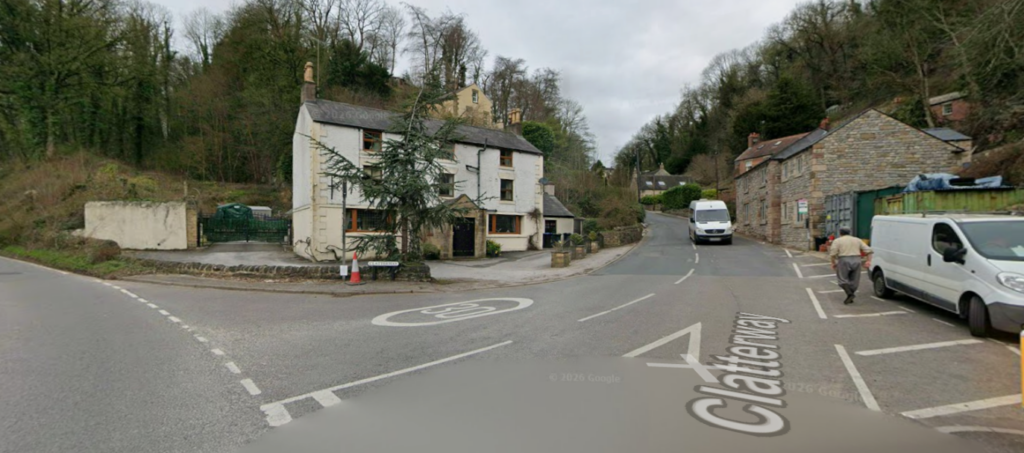
Clatterway and the Bonsall junction
The Clatterway junction leading towards Bonsall is another important area of concern. Vehicles may slow sharply to leave the A5012 or wait for a gap before joining it.
The valley’s bends and roadside features can restrict visibility, making it difficult to judge how quickly traffic is approaching. Drivers waiting to emerge must allow enough time to join safely without forcing another vehicle to brake.
Those already on the A5012 should watch for:
- Vehicles indicating late
- Traffic waiting to turn across the road
- Cars emerging cautiously from the junction
- Cyclists approaching or leaving the side road
- Larger vehicles needing a wider turning path
Overtaking close to the junction is particularly risky. A vehicle travelling slowly may be about to turn rather than inviting another driver to pass.
Public footpaths and pedestrian crossing points
Several public rights of way meet or cross the A5012. Walkers may emerge from woodland paths onto a road where traffic is moving much faster than expected.
Road-safety plans for the corridor have included improvements at places where footpaths reach the carriageway. These locations deserve attention even if no pedestrian warning is immediately obvious.
Drivers should scan both verges for walkers, dogs and small groups waiting to cross. Pedestrians should stop in a safe position, keep children and dogs close, listen for approaching traffic and cross only when there is a clear view in both directions.
Woodland can make vehicles harder to hear until they are close, especially when wind or flowing water creates background noise.
The descent towards Cromford
As the road descends towards Cromford, drivers must manage bends, gradients and the possibility of slower traffic ahead. Repeated braking can reduce control if a vehicle enters the descent too quickly.
Selecting a suitable lower gear can help control speed without relying entirely on the brakes. A safe gap should be maintained behind cyclists, who may need to move away from the edge to avoid drains, debris or damaged surfaces.
Drivers should not attempt to pass unless they can see far enough ahead to complete the manoeuvre safely. Patience is essential: the next bend or junction often arrives sooner than expected.
Cromford, the B5036 and the A6
The eastern end of the journey brings another major change in road character. After the enclosed valley, drivers enter a busier area around Cromford, with junctions, buildings, pedestrians, parked vehicles and traffic connecting with the B5036 and A6.
The transition can be easy to underestimate. Drivers who have become accustomed to the rhythm of the rural road must quickly adjust to village traffic and more frequent stopping or turning movements.
Main concerns include:
- Queues forming near junctions
- Vehicles changing direction with limited warning
- Pedestrians crossing near local facilities
- Cyclists travelling through the village
- Parked vehicles reducing the available width
- Drivers concentrating on signs rather than the road
- Traffic approaching from several directions
Reduce speed before reaching the built-up area and be prepared to stop. Avoid accelerating towards a queue or following another vehicle through a junction without checking that there is room to clear it.
Motorcyclists on the A5012
The A5012’s bends and scenery make it attractive to motorcyclists, but the route leaves little margin for mistakes. Damp surfaces, debris, tightening bends and roadside objects can turn a small loss of control into a serious incident.
Motorcyclists should enter bends at a speed that preserves a clear safety margin and should avoid positioning themselves too close to the centre line. Protective barriers with motorcycle-friendly features have been included among the safety measures considered for some of the route’s major bends.
Other drivers should check carefully for motorcycles before pulling out or turning. A motorcycle’s smaller profile can make its speed and distance difficult to judge.
Cyclists and safe overtaking
Cyclists may travel more slowly through the valley, particularly on climbs, but they have the same right to use the road as motor vehicles.
Blind bends and limited forward visibility mean there may be long sections where passing is unsafe. Drivers should wait until they can give the cyclist plenty of room and complete the manoeuvre without crossing into the path of oncoming traffic.
Cyclists may need to move towards the centre of the lane to avoid drains, broken edges, leaves or loose stone. This is usually a safety decision, not an attempt to delay traffic.
A safer journey depends on patience
The A5012 is not a road that rewards rushing. Its hazards are created by a combination of landscape, weather, junctions and the wide variety of people who use it.