
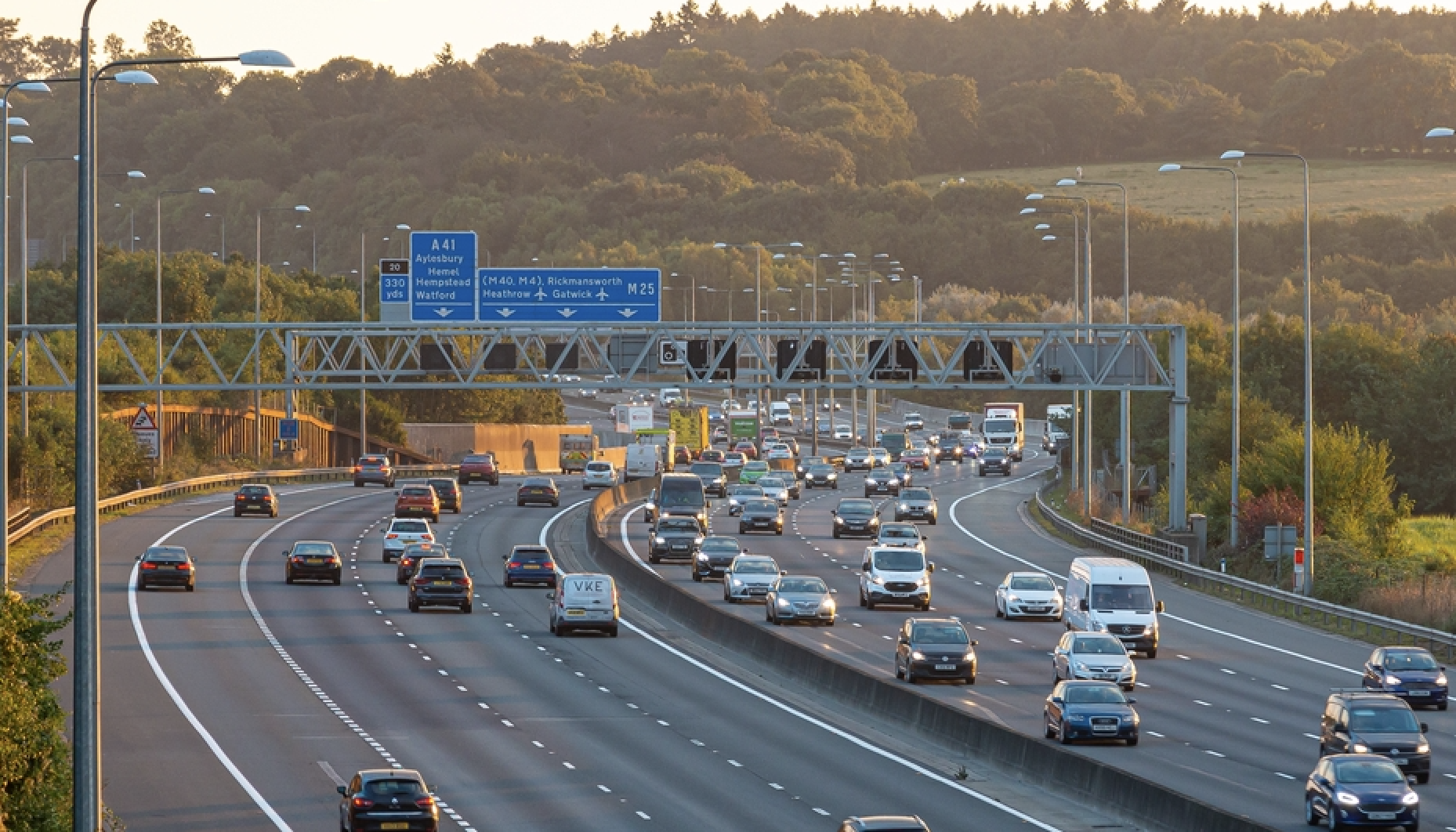
The M25 has a reputation for a reason. It is London’s orbital motorway, it carries huge volumes of traffic, and some stretches are exceptionally busy. National Highways says Junction 10 alone sees more than 300,000 vehicles a day. For a new driver, the challenge is not just speed; it is the combination of heavy flow, frequent junction choices, lane changes, and overhead signs that can all arrive at once. That is why the M25 can feel intimidating at first, especially if you are also learning the habits of driving in Britain. The good news is that it becomes far more manageable once you stop seeing it as a test of confidence and start seeing it as a system: prepare well, stay predictable, and make calm decisions early.
Start with the UK basics
Before you even think about the motorway, make sure you are legally and practically ready to use it. GOV.UK provides the official checker for driving in Great Britain on a non-GB licence, and that is worth confirming before you plan a long trip. It is also important to remember that UK distances and speed limits are shown in miles and miles per hour, not kilometres. For newly qualified drivers, the stakes are higher too: your licence will be revoked if you get 6 or more penalty points within 2 years of passing your test. And if you still hold only a provisional car licence, motorway driving is permitted only with a DVSA-approved instructor in a dual-control car displaying L plates.
The single best M25 tip is simple: plan before you move. The Highway Code says you should plan your route, allow enough time for breaks and delays, and make sure you have enough fuel or charge for the journey. On the M25, that matters because incidents, roadworks and closures can turn a routine drive into a stressful one very quickly. Check National Highways and Traffic England before you leave, and for your first few runs, pick an easier time of day rather than the heaviest rush hour. Because it circles London, routes are often understood as clockwise or anticlockwise, so know your direction and your junction number before you join.

One detail regularly catches out drivers who are new to the UK: the eastern side of the route uses the A282 Dartford Crossing. National Highways says the A282 connects directly with the M25 at both ends. You usually need to pay the Dart Charge if you use the crossing between 6am and 10pm, with payment due by midnight the day after you cross. The Dart Charge is completely separate from the London Congestion Charge. That means paying one does not cover the other, so if your M25 trip includes Dartford, factor the charge into your journey in advance.
Join smoothly and keep things simple
When you join the M25, discipline matters from the first second. The Highway Code states that traffic already on the motorway has priority, so use the slip road to build up speed and match the flow before moving into the left-hand lane. For drivers from countries where traffic keeps right, repeat the basics to yourself before you merge: drive on the left, overtake on the right, return left when finished. Do not join timidly at a much lower speed and hope everyone else will sort it out for you. A smoother, more confident merge is usually the safer one because it makes your actions easier for other drivers to read. Once you are on the motorway, stay in the left lane long enough to settle in and get used to the pace before you think about overtaking.
A lot of new-driver stress comes from trying to do everything too late. The M25 rewards drivers who make decisions early. You should keep in the left lane unless overtaking, and after overtaking, you should return left when it is safe. You should overtake on the right, not the left, and you should not weave across lanes to gain tiny advantages. If your exit is coming up, move across in good time rather than diving for it at the last moment. And if you miss your junction, accept it. Never reverse on a motorway or slip road and simply continue to the next exit. That one habit alone can prevent a bad mistake from becoming a dangerous one.
Learn to read the motorway itself
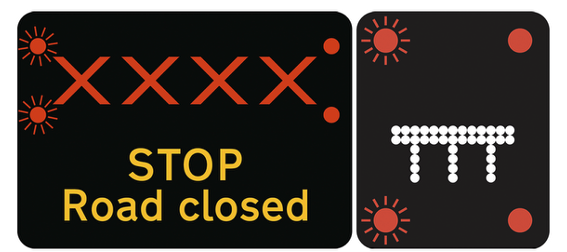
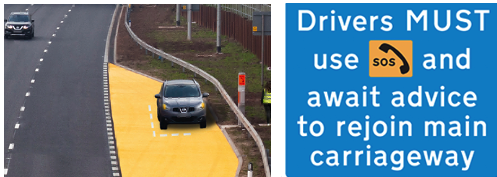
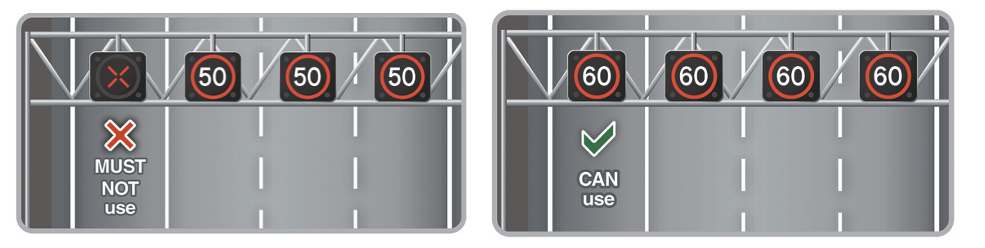
Confidence on the M25 often comes down to understanding the gantries and lane signals. A speed limit shown in a red circle is mandatory, including a variable limit on an overhead sign. A red X means the lane is closed and must not be used – see below. On some sections, you may encounter smart motorway features, including emergency areas rather than a permanent hard shoulder. Those areas are marked by blue signs with an orange SOS symbol and are for emergencies only. And where a hard shoulder is used as a running lane, you may use it only when a speed limit is displayed above it.
For most cars, the normal motorway speed limit is 70 mph unless a lower limit is signed. The Highway Code recommends at least a two-second gap between you and the vehicle in front on high-speed roads, doubled in wet conditions and much greater in ice. In fog or heavy spray, you must use your lights correctly and drive so that you can stop within the distance you can see to be clear. New drivers often focus too much on staying fast enough; on the M25, your real safety tool is space.
Stay calm around other traffic
The M25 can feel aggressive, especially if you are inexperienced. Faster cars may appear in your mirrors very quickly, and lorries can make the road feel narrower than it really is. The answer is not to compete. Hold a steady, legal speed, leave a proper gap in front, and let quicker drivers go when it is safe. Avoid sitting beside HGVs for longer than necessary, as your forward visibility is reduced and your options are reduced if traffic suddenly bunches up. Try to keep your driving smooth and well planned rather than reactive. If someone tailgates, do not let that tempt you to speed or make a rushed lane change; just keep your margin in front and complete your manoeuvre safely.
Motorway fatigue is real, especially for new drivers who are concentrating hard. The Highway Code recommends a break of at least 15 minutes after every two hours of driving. Do not treat the hard shoulder or an emergency area as somewhere to stop for a coffee, swap drivers, check directions or answer messages. Those places are for emergencies only. And when you leave the M25, remember another motorway trap: after sustained motorway speed, 50 mph can feel like 30 mph. Check your speedometer on the slip road and slow down earlier than your instincts suggest.
Emergency areas (below) are located along motorways with no hard shoulder or where the hard shoulder can be used as an extra lane and MUST only be used in an emergency. They are marked by blue signs with an orange SOS telephone symbol and may have orange surfacing:
Rule 269 – Hard shoulder (where used as an extra lane – see below). The hard shoulder is used as an extra lane on some motorways during periods of congestion. A red ‘X’ or blank sign above the hard shoulder means that you MUST NOT use the hard shoulder except in an emergency.
Know your emergency plan before you need it
The final piece of M25 confidence is knowing what you would do if something went wrong. If your vehicle develops a problem, you should leave the carriageway at the next exit or pull into a service area if possible. If you cannot, go left: aim for the hard shoulder or an emergency area, stop as far left as possible, switch on your hazard lights, and if it is safe to do so, leave the vehicle by the side furthest from traffic and wait behind the barrier.
If you cannot get to a place of relative safety or cannot get out safely, stay in the vehicle, keep your seat belt on, keep your hazard lights on, and call 999, or use the SOS button if your vehicle has one. The Highway Code also says not to place a warning triangle on a motorway, and if you stop in an emergency area, you must use the emergency telephone and follow the operator’s advice before rejoining the carriageway. Knowing that routine in advance can turn panic into action.
Marker post or driver location sign – see below. If needed, quote the numbers and letters on marker posts or driver location signs, which are located along the edge of the road.
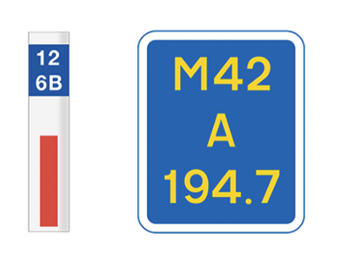
The M25 rewards calm, prepared driving. For new drivers and drivers new to the UK, the smartest approach is not to be bold or fast but to be early, clear and predictable: plan the journey, join smoothly, stay left unless overtaking, obey the gantries, keep a generous gap, and accept the occasional missed exit without drama. Do that consistently and the M25 stops feeling like a hostile obstacle and starts feeling like what it really is: a busy motorway that becomes manageable once you understand how it works.
If you are involved in an incident or collision or stop to give assistance
This applies to all roads/motorways, not just the M25, extracted from The Highway Code, Rule 283:
• if possible, stop in a place of relative safety
• use your hazard warning lights to warn other traffic
• put on high-visibility clothing if you have it
• ask drivers to switch off their engines
• ask drivers and passengers to stop smoking
• contact the emergency services on 999
• move uninjured people away from the vehicles to a place of relative safety
• DO NOT move injured people from their vehicles unless they are in immediate danger
• DO NOT remove a motorcyclist’s helmet unless it is essential and you are trained to do so
• be prepared to give first aid
• stay at the scene until the emergency services arrive
• be prepared to exchange details
Rule 278 – To rejoin the carriageway after a breakdown from:
a hard shoulder, build up speed, indicate and watch for a safe gap in the traffic. Be aware that vehicles, obstructions or debris may be present on the hard shoulder.
To rejoin the carriageway after a breakdown from an emergency area, you MUST use the emergency telephone provided and follow the operator’s advice for exiting the emergency area. A lane may need to be closed so that you can rejoin the carriageway safely.
Driver Training for Motorways:
Discover our range of bespoke motorway courses, including those designed for the M25 – More Info.